Home / Academy / Get cards graded
Free video training · Watch now
How to get Pokémon cards graded, and only grade the ones that pay
Grading costs money and takes weeks. Done right, it turns a $20 card into a slab worth far more. Done wrong, you pay to learn your card is a 7. Here's the full process. Want to see real cards checked step by step? Get the free video training.
Free · Video · Watch anytime
Get the free training
About 15 minutes. It plays right after you sign up. See the class.
- The 4-check pre-grade. Centering, corners, edges, surface, in two minutes.
- The profit math. Which cards beat the fee, using our daily list.
- The submission, step by step. Forms, service levels and packing.
Updated October 2026
The short answer
To get a Pokémon card graded, pick a card worth more graded than the fee, check its condition, choose a grading company (PSA, CGC or BGS), fill out a submission online with the card's value, pack it in a penny sleeve and a semi-rigid holder, and ship it insured. You get it back sealed in a slab with a grade from 1 to 10.
- Pick cards where the graded value beats raw price plus fees.
- Pre-grade: centering, corners, edges, surface.
- Choose a company and a service level that fits the card's value.
- Create the submission online and print the form.
- Pack: penny sleeve, semi-rigid holder, cardboard, box.
- Ship insured with tracking.
- Get the slab back, then keep it or sell it.
In this guide
Which cards are worth grading
Grading pays when the graded card sells for more than everything it cost you. The math is simple:
Profit = graded sale price − selling fees − (raw card cost + grading fee + shipping)
The catch is the grade. A card that's worth a lot as a PSA 10 can be worth little more than raw as a PSA 8. So run the math at a 9 too, not just a 10. If the card only pays at a 10, you need it to be close to perfect.
You don't have to do this by hand. Our best Pokémon cards to grade list ranks thousands of cards by profit after PSA's real fees, every day. The PSA grading calculator does the math for any card you own.
The 4-check pre-grade
Check every card under a bright light before you pay to grade it. Most cards that come back as 8s could have been spotted at home.
1. Centering
Compare the borders left to right and top to bottom. For a PSA 10, the front can be off by no more than about 55/45, and the back about 75/25. A PSA 9 allows about 60/40 to 65/35 on the front, and 90/10 on the back. Our 4-step centering test shows how to measure it.
2. Corners
Look for any rounding or white at the tips. One soft corner usually caps a card below a 10.
3. Edges
Check the back edges for white specks ("whitening") and the front for chips. Dark-bordered backs show every flaw.
4. Surface
Tilt the card under the light. Look for scratches, print lines, dents and fingerprints, especially on holo and full-art cards. A light that rakes across the surface finds what a straight-on look misses.
For a deeper walkthrough, see the four checks before you send cards to PSA.
See what a 10 really looks like
The free video training measures real card photos up close, so you learn to spot a 10.
PSA, CGC or BGS?
| Company | Best for | Keep in mind |
|---|---|---|
| PSA | Resale value. PSA slabs usually sell for the most on Pokémon. | Fees rise with the card's declared value, and cards that grade into a higher value can be upcharged. |
| CGC | Lower fees and strict grading. Popular with modern collectors. | Slabs often sell for less than PSA at the same grade. |
| BGS (Beckett) | Subgrades for centering, corners, edges and surface. A "Black Label" 10 sells for a premium. | Fewer Pokémon buyers pay up for BGS than for PSA. |
For the full comparison, read card grading explained. For PSA's current prices and tiers, see PSA grading cost. We check it against PSA's site so you don't have to.
How to submit Pokémon cards to PSA
- Create a free account on PSA's website.
- Start a submission and choose the service level. Service levels are set by the card's declared value, which is what you think it's worth after grading.
- Add each card: year, set, card number and name, plus the declared value.
- Pay and print the submission form. It goes in the box with your cards.
- Pack and ship (below), then track it in your PSA account.
Don't want to ship? Many card shops and card shows collect submissions and send them in for you, for a fee. PSA also takes cards in person at some large shows.
How to pack cards for grading
- Clear penny sleeve on every card.
- Semi-rigid holder (the Card Saver type), not a toploader. No tape, no tabs, no sticky notes.
- Stack them in the order on your submission form, item 1 on top.
- Sandwich the stack between two pieces of cardboard with a couple of rubber bands, snug but not tight.
- Use a sturdy box with padding so nothing moves. Movement is what dings corners.
- Ship insured with tracking.
When the slabs come back
Check every slab against your list. Then decide: keep, or sell. Graded cards sell well on eBay, on Whatnot (see how to sell on Whatnot), and to shops. Our guide on how to sell Pokémon cards compares the options and fees.
Mistakes that waste grading fees
| Mistake | What it costs | Do this instead |
|---|---|---|
| Grading cards that only pay at a 10 | Paying fees on a card that comes back a 9 and loses money | Run the math at a PSA 9 before you send |
| Skipping the light check | Surface scratches you could have seen | Raking light, both sides, every card |
| Lowballing declared value | Upcharges when the card grades high | Declare what it's worth graded |
| Toploaders in the box | Delays and handling risk | Penny sleeve + semi-rigid holder |
| Selling raw cards that would pay graded | Leaving money on the table | Check our daily cards to grade list first |
Updated daily
Cards worth grading right now
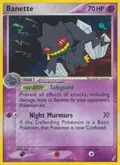 Banette #1/100EX Crystal Guardians · raw $19.31 · PSA 10 $1,423 · keep $1,133
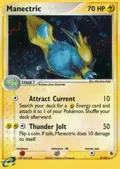 Manectric #9/109EX Ruby and Sapphire · raw $18.07 · PSA 10 $1,396 · keep $1,111
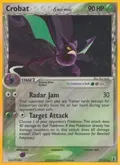 Crobat (Delta Species) #2/113EX Delta Species · raw $31.87 · PSA 10 $1,750 · keep $1,287
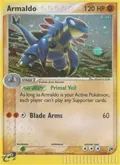 Armaldo #1/100EX Sandstorm · raw $24.96 · PSA 10 $1,600 · keep $1,163
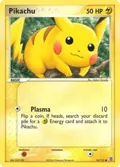 Pikachu #74/112EX FireRed & LeafGreen · raw $12.51 · PSA 10 $1,260 · keep $999
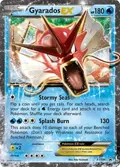 Gyarados EX #XY106XY Promos · raw $26.61 · PSA 10 $1,613 · keep $1,172
 Zehahahahaha! (Alternate Art) OP16-116One Piece · The Time of Battle · raw $45.33 · PSA 10 $250 · keep $107
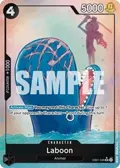 Laboon (Alternate Art) EB01-048One Piece · Extra Booster: Memorial Collection · raw $60.08 · PSA 10 $276 · keep $115
 Nami (Tournament Pack Vol. 3) [Participant] ST01-007One Piece · One Piece Promotion Cards · raw $5.77 · PSA 10 $156 · keep $64.61
 Celtic Guardian LOB-007Yu-Gi-Oh · The Legend of Blue Eyes White Dragon · raw $95.66 · PSA 10 $2,032 · keep $1,468
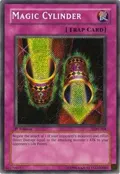 Magic Cylinder LON-104Yu-Gi-Oh · Labyrinth of Nightmare · raw $18.72 · PSA 10 $975 · keep $765
 Thousand-Eyes Restrict PSV-084Yu-Gi-Oh · Pharaoh's Servant · raw $88.03 · PSA 10 $1,930 · keep $1,387
 With Iron and Blood (SP) (C+) ST05-013Gundam · Steel Requiem · raw $8.31 · PSA 10 $85.00 · keep $0.65
 Psycho Gundam (LR+) GD02-001Gundam · Dual Impact · raw $20.71 · PSA 10 $99.00 · keep $0.43
 Cagalli Yula Athha (R+) GD01-096Gundam · Newtype Rising · raw $31.39 · PSA 10 $111 · keep $0.20
SM Trainer Kit: Lycanroc & Alolan Raichu pricesShining Legends pricesDeck Exclusives pricesGenerations pricesAerodactyl cardsNidoking cardsZorua cardsFeraligatr cardsMuk cardsZamazenta cards
One Piece card pricesMost expensive One Piece cardsAdventure on Kami's Island Release Event Cards card listExtra Booster: One Piece Heroines Edition card listExtra Booster: One Piece Heroines Edition Vol. 2 card listYu-Gi-Oh card pricesMost expensive Yu-Gi-Oh cardsBeyond the Brave card listBlazing Dominion card listBurst Protocol card listGundam card pricesMost expensive Gundam cardsEternal Nexus card listFreedom Ascension card listPhantom Aria card list
The full workshop
Grading for Profit Workshop
The free training shows the process. The workshop gives you the whole system: what to buy to grade, how to pre-grade like a pro, and how to sell slabs for the most.
- The profit mathWhen grading pays, at a 10 and at a 9, using live prices.
- Pre-grading, up closeReal card photos measured up close: centering, corners, edges, surface.
- Finding cards worth gradingCollections, card shows and bulk: where 10s are hiding.
- Company and service levelPSA vs CGC vs BGS by card, and how to avoid upcharges.
- The submission, click by clickA full screen walkthrough of a real submission.
- Selling the slabWhere graded cards sell for the most, and when to hold.
- Bonus: printable centering guide and pre-grade checklist
- Bonus: submission tracker spreadsheet
- Bonus: grading profit calculator spreadsheet
Start here
Free
Watch the 15-minute training first. You'll see how to unlock the full class after.
Watch the free training- 6 recorded lessons
- Checklists and tracker
- Watch anytime, on any device
Who's teaching
We price 41,000+ Pokémon cards a day. We know which grades pay.
Greedy TCG started as a reseller crew. Today we run the daily price data behind our cards to grade list and grading calculator, and help sellers and shops with the business side of cards. Meet the team.
Greedy TCG is independent and not affiliated with PSA, CGC, Beckett or The Pokémon Company. Grades are never guaranteed.
Questions
Common questions
How much does it cost to get a Pokémon card graded?
It depends on the company, the service level and the card's declared value. PSA prices by value tier, and higher-value cards cost more to grade. See our PSA grading cost page for today's tiers.
How long does it take to get Pokémon cards graded?
From a couple of weeks on the fastest (most expensive) service levels to several months on the cheapest. See current PSA turnaround times on our PSA grading cost page.
Can I get Pokémon cards graded at a local card shop?
Many card shops and card shows collect submissions and send them to PSA or CGC for you, usually for a fee per card. It saves you the paperwork and shipping.
Is it worth grading modern Pokémon cards?
Only when the graded value beats the fees. For many modern cards, a PSA 10 pays and a PSA 9 doesn't. Check the card in our grading calculator first.
Should I use PSA or CGC for Pokémon?
PSA slabs usually resell for the most, so PSA is the default when you plan to sell. CGC is often cheaper and popular with collectors who plan to keep their cards.
Is the training really free?
Yes. The video training is free. At the end we'll tell you about the paid workshop. Buying it is optional.
Free video training
Stop paying to grade 8s.
Free, about 15 minutes. It plays right after you sign up.
More classes: selling on Whatnot · Pokémon card investing · opening a card shop · all classes