The 30th Anniversary set increased Special Illustration Rare odds to 5.24%, making them 1 in 20 packs. This supply increase caused Mew and Mewtwo ex prices to drop from $1,000 to $150.
Why Are Pokémon 30th Prices Dropping?
Pokémon officially declared war on scalpers. The era of paying triple the box price for a guaranteed hit is over. The 30th Anniversary set broke the cycle by fundamentally changing the odds.
Special Illustration Rares now hit 5.24% of packs. That is one SIR in every 20 packs. Previously, you waited one in eighty. This massive shift in probability means the supply of high-value cards has exploded. When supply rises and demand stabilizes, prices must fall.
Illustration Rares also doubled to one in five. While these are less valuable than SIRs, their increased frequency adds to the overall value of a box. The math no longer favors the scalper. It favors the casual buyer who just wants to open packs for fun.
How Did the SIR Odds Change?
The numbers tell the story. The previous standard for Special Illustration Rares was 1 in 80 packs. That meant you needed a full booster box to have a reasonable chance at a top-tier card. It was a high-risk, high-reward gamble that favored those with deep pockets.
Now, the 30th Celebration SIR pull rate is 5.24%. This translates to 1 in 20 packs. You no longer need a full box to see a premium card. You can buy a single pack and have a solid chance. This accessibility is the primary driver of the price crash. The barrier to entry for collectors has lowered significantly.
What Happened to Mew and Mewtwo Prices?
The most dramatic price drop occurred with the Future Rare Mew and Mewtwo. These cards appear near 1% of packs. Before the 30th set, these were elusive. Now, they are common enough to flood the secondary market.
Mew and Mewtwo ex prices dropped from $1,000 to $150. This is not a minor adjustment. It is a collapse. Creator Leonhart pulled both in his first 50 packs, proving that the odds are real and achievable for average players. When a popular content creator pulls these cards frequently, the market reacts instantly. The scarcity premium evaporates.
Why Did Malaysian Scalpers Get Caught?
The price crash was not just a result of new odds. It was also a result of enforcement. In Malaysia, scalpers were exposed for manipulating the local market. They hired workers to queue for boxes.
These workers were paid RM100 to buy boxes at RM449. The scalpers then resold these boxes for RM700+. This generated a profit of RM250 per box. It was a simple arbitrage play. Buy low, wait for hype, sell high.
However, a Malaysian scalper was arrested for hiring workers to queue. This legal action sent a shockwave through the community. It signaled that Pokémon was no longer tolerating the manipulation of local supply. When the physical queue is disrupted, the artificial scarcity disappears.
Is the Scalper Era Over?
Not entirely, but the economics have shifted. Scalpers relied on information asymmetry and physical access. They knew the odds were bad for casuals, so they bought in bulk. They knew the hype would drive resale prices up.
Now, the odds are public and favorable. The SIR rate of 5.24% is known. The Mew and Mewtwo 1% rate is known. When everyone knows the odds, the "insider
More news
Keep reading
Updated daily
Cards worth grading right now
 Chansey #003/130Base Set 2 · raw $22.46 · PSA 10 $6,063 · keep $4,648
 Lapras (10) #10/62Fossil · raw $29.61 · PSA 10 $3,906 · keep $3,014
 Dragonite #5/20Dragon Vault · raw $34.33 · PSA 10 $4,050 · keep $3,135
 Poliwrath (9) #09/75Neo Discovery · raw $48.35 · PSA 10 $4,342 · keep $3,375
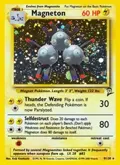 Magneton #009/130Base Set 2 · raw $25.00 · PSA 10 $3,025 · keep $2,253
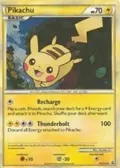 Pikachu #HGSS03HGSS Promos · raw $38.26 · PSA 10 $2,800 · keep $2,044
 Zehahahahaha! (Alternate Art) OP16-116One Piece · The Time of Battle · raw $56.99 · PSA 10 $800 · keep $574
 Monkey.D.Luffy (1st Anniversary Tournament) P-037One Piece · One Piece Promotion Cards · raw $37.97 · PSA 10 $499 · keep $331
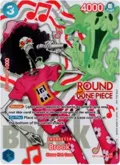 Brook (Round 1 Promo) OP11-056One Piece · One Piece Promotion Cards · raw $15.87 · PSA 10 $385 · keep $254
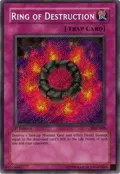 Ring of Destruction PGD-000Yu-Gi-Oh · Pharaonic Guardian · raw $49.62 · PSA 10 $2,525 · keep $1,793
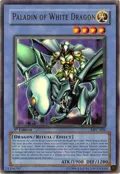 Paladin of White Dragon MFC-026Yu-Gi-Oh · Magician's Force · raw $31.90 · PSA 10 $1,800 · keep $1,330
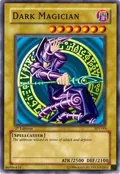 Dark Magician SDY-006Yu-Gi-Oh · Starter Deck: Yugi · raw $33.17 · PSA 10 $1,760 · keep $1,294
 Freedom Gundam (LR+) GD03-070Gundam · Steel Requiem · raw $51.62 · PSA 10 $256 · keep $106
 Gundam (LR+) GD01-001Gundam · Newtype Rising · raw $66.79 · PSA 10 $274 · keep $107
 Resource (C++) R-025Gundam · Steel Requiem · raw $36.23 · PSA 10 $208 · keep $80.16
Jumbo Cards pricesXY - Ancient Origins pricesXY - BREAKthrough pricesXY - Primal Clash pricesMarill cardsSableye cardsRowlet cardsRiolu cardsWailord cardsGloom cards
One Piece card pricesMost expensive One Piece cardsAdventure on Kami's Island card listAdventure on Kami's Island Release Event Cards card listExtra Booster: One Piece Heroines Edition card listYu-Gi-Oh card pricesMost expensive Yu-Gi-Oh cardsBattles of Legend: Glorious Gallery card listBlazing Dominion card listBurst Protocol card listGundam card pricesMost expensive Gundam cardsDeck Build Box Freedom Ascension card listEternal Nexus card listFreedom Ascension card list